

rituals of Becoming
on faith, uncertainty, and the slow work of transformation.

“Let everything happen to you: beauty and terror.” — Rainer Maria Rilke
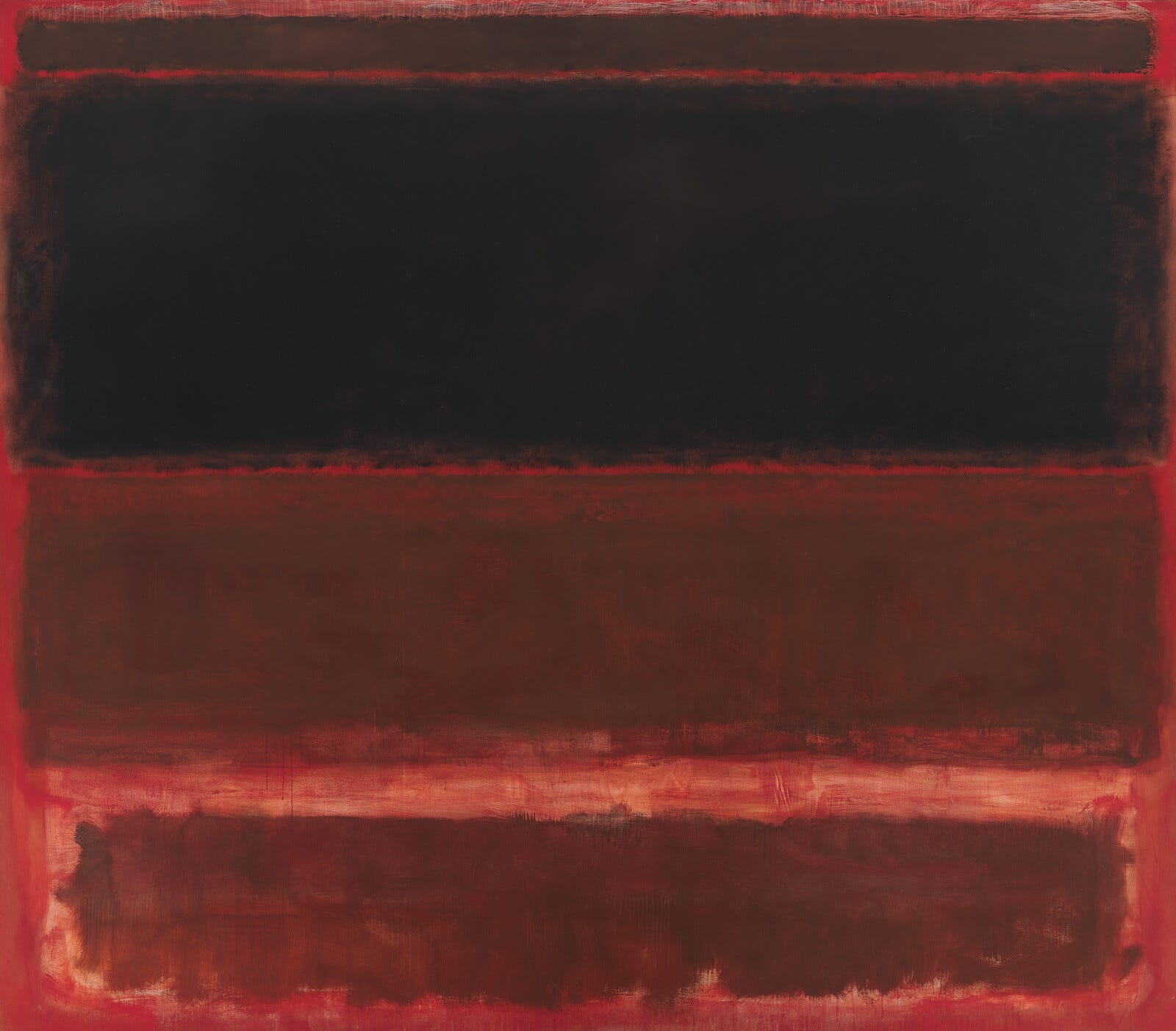
My days are filled with activities done in faith. Even though I have nothing planned, my alarm goes off at the same time every morning. I retire to bed at 9pm, even though I stay awake until 2am on most nights anyway. Would this be the morning I wake up and feel like myself again? Is this the cup of coffee that’ll fix me? Is this the run that will change my life? Is this the journal entry that’ll finally bring me clarity? Would this night be the one where I finally sleep through until the morning with no interruptions?
I find it interesting how faith—and magical thinking—is more pervasive in our everyday lives than we care to admit. I do it all the time. I perform these rituals and wait for the shift, certain that this time something will break differently. Most people would only ever go through with an activity if they can anticipate the outcome. But even when we can never really tell what will be, we persist, certain that when we perform an action, the result will always be as anticipated—or at least hoped for. But there’s a secret third thing: to be transformed.
But what does it take to be transformed?
In Shahrnush Parsipur’s Women Without Men, Mahdokht, one of the novel’s five central characters, transforms into a tree. Her spiritual restlessness and growing despair make her increasingly believe that the purest form of existence is not human but vegetative, and so she plants herself in the garden of her family home. Over time she takes root. Her body slowly becomes wood, bark, and seed.
Munis, another of the book’s central characters, has a different trajectory. The 38-year-old unmarried woman living at home under strict control of her older brother, grows increasingly interested in politics and longs to participate in the world of men and ideas. She dies twice in the novel—first in a fall, then murdered by her brother for what was considered immoral behaviour. At the time their paths cross, Munis is no longer human, having transformed after her second resurrection, and Mahdokht has dissolved fully into the tree. Munis knows she needs to transform again, so she chooses to become light.
How do I become light?, she asks.
I’ve been working through some big changes in my personal and professional lives. And while I usually prefer everything to stay exactly the way they are – the good things at least – I understand that life is really a gamble. The goal is to play as many times as you need to. I play the New York Times’ version of Scrabble every day, and for the most part I thrash the computer. But every few rounds, I lose, and so I reset and go in for the kill again. No mourning the loss, no changing the rules, just another round.
Because it’s the playing that is irresistible.
“Gambling is not a vice; it is an expression of our humanness. We gamble. Some do it at the gaming table, some do not. You play, you win, you play, you lose. You play. It’s the playing that is irresistible. Dicing from one year to the next with the things you love, what you risk reveals what you value.”
— Jeanette Winterson, The Passion.
Oftentimes when one is in transformation, there is a sense of wandering. The changes I am making do not feel clean or certain. There are days when the ground shifts beneath me and I cannot tell whether I’m losing my footing or standing on the edge of something I have not yet found the courage to jump from. Perhaps it’s fear. Perhaps it’s the cowardice of someone who can see exactly what needs to be done and keeps finding reasons not to. Maybe it’s both. The disorientation and the excitement feel more like counterparts than opposites—arriving together, inseparable.
What I am learning is that some transformations require a particular kind of maniacal individualism—like Mahdokht’s. The kind of necessary selfishness that feels slightly uncomfortable to admit to because you are taught that the self must always yield. It’s insanity, this level of self-conviction. Choosing yourself so decisively that it borders on obsession. I am only now beginning to understand what I am willing to put at stake and what that says about me. I have to reach for a version of myself I thought I knew well. The one who believed, without much evidence, that things would work out. Somewhere along the line I misplaced her. I’m looking again, methodically, the way you search for something you know must still be in the house. A game of cat and mouse. You play, you win, you play, you lose. You play.
Rilke, in Book of Hours I 59, instructs the reader to let everything happen—the beauty and the terror both. No feeling is final. I have been holding onto this lately, turning it over, reciting it as a mantra. The disorientation is not permanent, neither is the fear, nor the cowardice, nor the not-knowing. You move through them the way you move through everything—with faith. Refusing to let any one feeling have the last word. I am learning to make peace with the not-knowing. Foucault understood this:
“I don’t feel that it is necessary to know exactly who I am. The main interest in life and work is to become someone else that you were not in the beginning. If you knew when you began a book what you would say at the end, do you think that you would have the courage to write it? What is true for writing and for love relationships is true also for life. The game is worthwhile insofar as we don’t know where it will end.”
— Michel Focault
The courage, I think, lies not in the knowing, but in the continuing anyway.
“How do I become light?”
“The day you conceive the essence of darkness. That is what you have to comprehend. That is the principle. Don’t seek to become light; that is a journey of no return... Now I tell you to go in search of darkness anew. Descend to the depths, to the depths. There you will see the light aglow in your hands, by your side. This is being human.”
— Shahrnush Parsipur, Women Without Men.

Dear friends, thank you for reading.
I know that it’s been a while since my last post, I hope you are well. I’ve been taking a long needed, long overdue break; if you have been a reader long, I suppose this comes as no surprise. I apologise.
But I’m back now. I have also been working on something new.
I recently launched Polycentric Dispatch, a publication focused on exploring the socio-cultural dimensions of politics, economics, and technology with Sub-Saharan Africa as its vantage point. You can find it here.
If you are so inclined, please like, subscribe, and share.
Thank you for being here :)
Love, Sylvia.